Blog
Design for simplicity at Payaca
This value represents our commitment and focus to remove complexity for our clients. In order to achieve this, it needs to be adopted across the whole organisation.
Enterprise wins, profitability, and why we're betting big on AI that actually does things.

Matt Franklin
Seven years in, I thought I knew what building Payaca looked like. 2025 proved me wrong, in the best way.
When we started 2025, we had a product that worked well for growing installers. By the end of the year, we're powering operations for some of the biggest names in UK clean tech. OVO Solar & Heating runs their entire franchise network on Payaca. British Gas chose us for their heating installation operations.
That shift forced us to raise our game. Enterprise customers don't just need features. They need reliability, security, and a team that picks up the phone. We've always prided ourselves on support, but there's a difference between helping a 10-person installer and being embedded in the operations of a national brand. We learned a lot this year about what "enterprise-ready" actually means.
I'll be honest, I expected ISO 27001 to be a box-ticking exercise. It wasn't. The process forced us to think rigorously about how we handle data, document processes, and manage risk. We came out of it a more disciplined company.
The other thing that changed this year is that we reached profitability. That might not sound exciting in an industry where raising money is often treated as an achievement in itself, but for us it matters. It means we control our own destiny.
Heat pump installations in the UK hit record numbers this year. The government's Clean Power 2030 plan is putting real pressure on grid infrastructure, which means storage and smart energy management are becoming essential. Solar installations are up. And critically, the installers we serve are busier than ever.
They have plenty of work. The challenge is scaling operations to capture the demand.
When you're doing 5 jobs a week, you can run things on spreadsheets and memory. When you're doing 20, you can't. That's exactly the problem Payaca solves. The installers who figure this out early are the ones winning market share right now.
I won't pretend I've been a clean tech evangelist for years. I came to this through building software for tradespeople, not through climate activism. But spending seven years working with installers who are actually decarbonising buildings changes your perspective.
I genuinely believe that better software for installers is one of the biggest levers for speeding up clean tech deployment. The technology exists. The demand exists. The bottleneck is getting it installed efficiently, at scale.
Honestly? The team. We're still only 10 people, but the quality of work being shipped is remarkable. Our engineers are building things that genuinely move the needle for customers. Tools that save hours every week.
We said no to things that would have been easy wins but wrong for the business. We turned down customers who weren't a good fit. We didn't chase vanity metrics. We stayed focused on building something that actually works.
Every business right now is suddenly "agentic AI for X". We've barely mentioned we're building with AI because ultimately, why should a customer care how a problem is solved?
But we've designed an embedded AI agent that's so useful, we have to tell them it's AI. Otherwise they'd think we were magic.
We're now rolling out Agent Dave. It can do the obvious stuff, like summarising your data. But it can also carry out tasks at lightning speed — create templates, edit projects, link materials, summarise customer data. Tasks that took hours will take seconds. More installs, faster. Accelerating the rollout of clean tech.
Next year is about building on what we've got.
The product roadmap is ambitious. Most of it is focused on making Payaca indispensable for multi-technology installers — the companies doing solar, batteries, heat pumps, and EV chargers together. That's where the market is heading, and we want to be the platform that makes it manageable.
The team is growing in Q1. If you know any exceptional engineers who want to work on hard problems in clean tech, send them my way.
Geographically, we're thinking bigger. The UK market has been good to us, but installers everywhere face the same problems. Fragmented tools, compliance headaches, operational bottlenecks. We're exploring what it would take to serve them.
Building a company is hard. There were weeks this year where I wasn't sure we'd land the deals that mattered. There were bugs that shouldn't have shipped. There were decisions I'd make differently with hindsight.
But the trajectory is clear: more happy customers, stronger product, a team that keeps raising the bar, and a market opportunity bigger than when we started. That's a good place to be heading into a new year.
Thanks to everyone who's been part of the journey. Customers, team, partners, and the installers doing the actual work of decarbonising buildings. Here's to 2026.
See how Payaca helps clean tech installers save time and grow their business.
Book a demoThis value represents our commitment and focus to remove complexity for our clients. In order to achieve this, it needs to be adopted across the whole organisation.
Payaca has achieved ISO 27001 certification, the internationally recognized standard for information security management, demonstrating our commitment to protecting customer data and privacy.
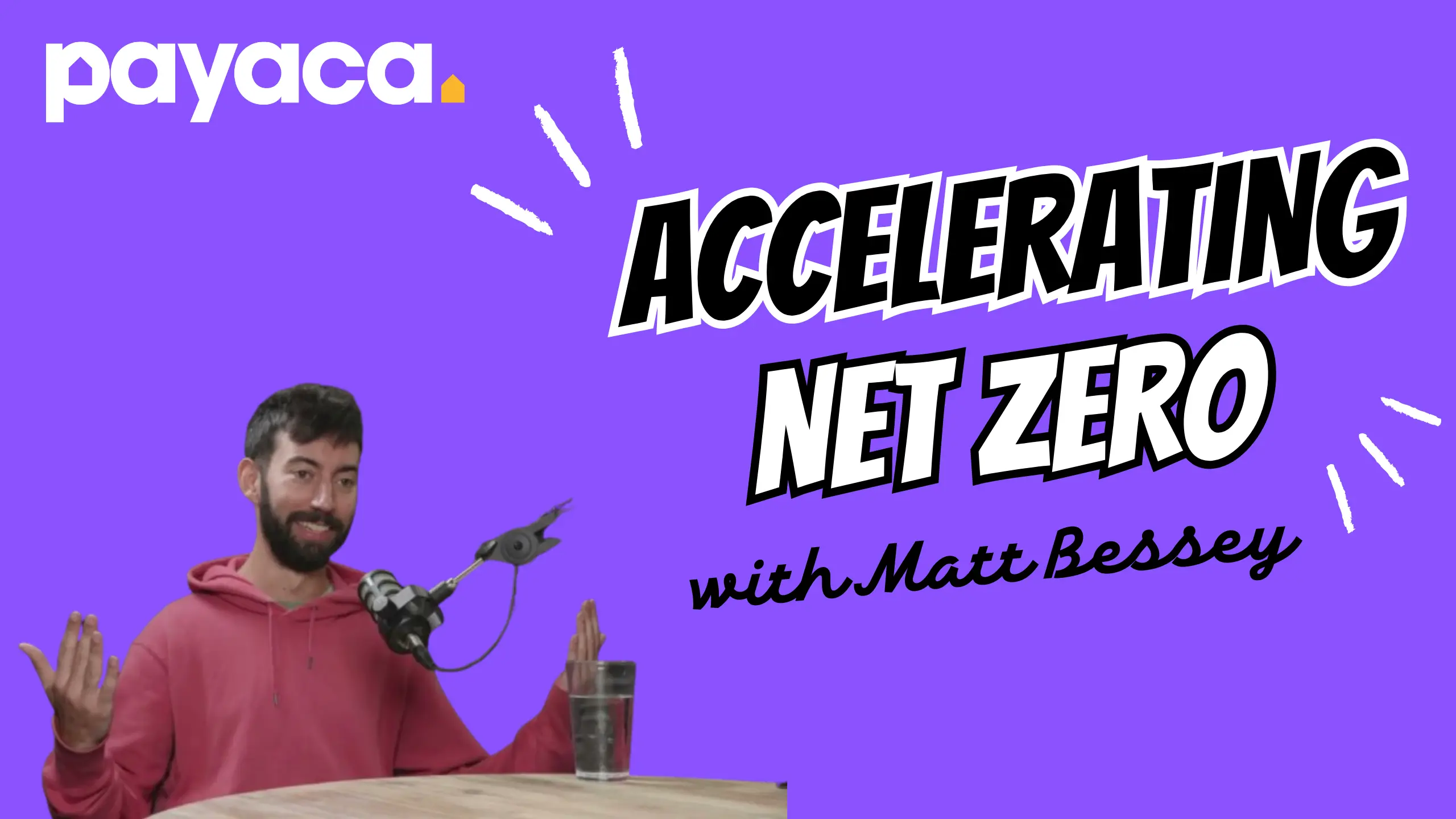
Join Matt Franklin, CEO of Payaca, as he sits down with the company's new Chief Technology Officer, Matt Bessey, to discuss how software innovation is driving the adoption of low-carbon technologies.