Blog
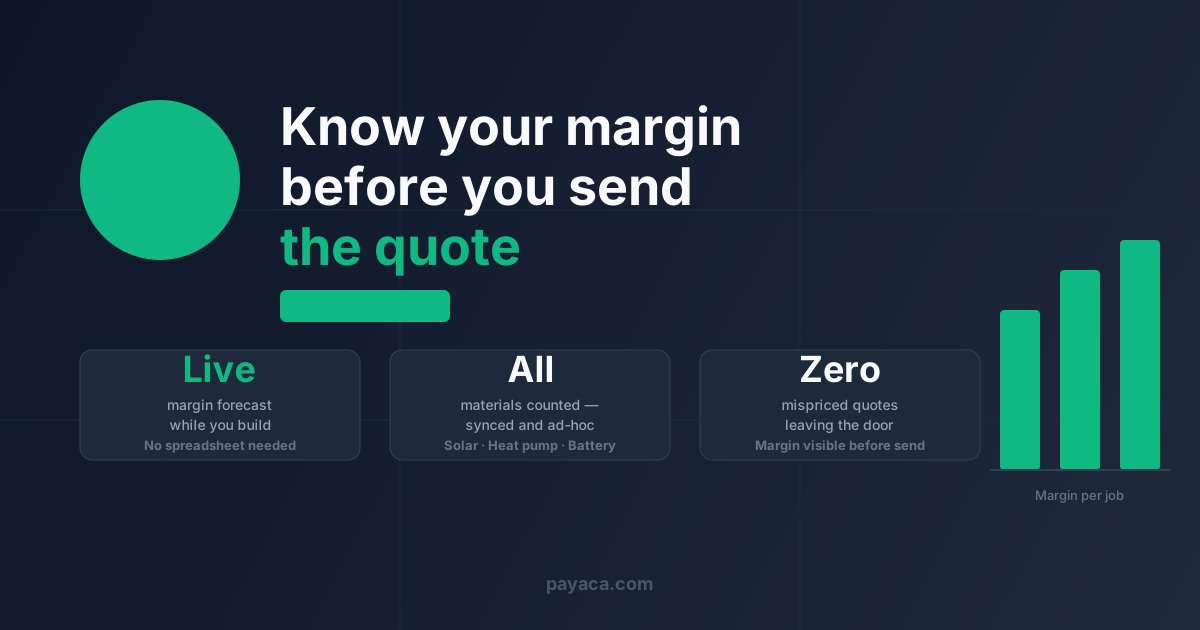
Know your margin before you send the quote
How Payaca's live profit forecast in the proposal builder helps clean tech installers stop mispriced jobs from going out the door.
Understanding when quotes become legally binding agreements. Learn the five essential elements that create enforceable contracts and how to protect your business.

Felix Rusby

Lock scope on every quote before it becomes a contract
For a growing solar, heat pump, or EV charger installer, the moment a quote is accepted is the moment your pricing and scope are fixed - which is exactly when unplanned site conditions or a DNO/MCS revision can turn a profitable job into a loss-maker. Book a 20-minute demo to see how Payaca attaches terms, captures e-signatures, and locks scope on every quote you issue.
A quote transforms into a binding agreement once both parties sign and accept it. Before acceptance, it remains merely a proposal rather than a legally enforceable document.
For installers running 15-50 jobs a month, this distinction is more than legal theory - it's the difference between billing for a scope change and eating the cost. Once a customer accepts a quote, you're committed to that price even if the survey missed a roof condition issue, the DNO comes back with a smaller export limit than planned, or the groundworks turn out harder than expected. Understanding exactly when a quote becomes binding - and building your process so every accepted quote carries clear terms, scope, and a validity period - protects the margin you priced in.
For a quote to become a legally binding contract, five elements must be present:
Something of value must be exchanged between the two parties. In most trade scenarios, this means your services in exchange for payment. Both sides must receive something of value.
Both parties must clearly demonstrate their agreement. This typically occurs through written or electronic signatures. Verbal acceptance can count but is harder to prove.
Both parties must show intention to create and participate in the contract. Ambiguity here undermines enforceability - if it's unclear whether either party intended to be bound, courts may rule the agreement unenforceable.
Parties must possess legal authority to consent. This excludes minors and those lacking mental capacity. For business contracts, the person signing must have authority to bind their organisation.
The contract's contents cannot violate applicable laws. You cannot create an enforceable contract for illegal activities or terms that contravene consumer protection regulations.
To ensure your quotes create enforceable agreements when accepted:
Attach comprehensive terms and conditions that explicitly state the document constitutes a binding contract upon acceptance.
Obtain customer signatures acknowledging agreement to both the quoted work and your terms.
Use clear presentation that distinguishes quotes from casual estimates or ballpark figures.
Include essential details: scope of work, materials, timeline, payment terms, and any exclusions.
Specify validity periods - how long the quoted price remains available.
Unlike quotes, estimates operate as non-binding price approximations. They indicate roughly what work might cost without committing either party.
Key differences:
| Quotes | Estimates |
|---|---|
| Fixed price commitment | Approximate indication |
| Binding when accepted | Non-binding |
| Detailed scope | General overview |
| Specific validity period | Informal timeframe |
Clear labelling prevents misunderstandings. If you're providing an estimate, say so explicitly. If it's a formal quote, make that equally clear.
Once a quote becomes a binding contract, changes require mutual approval from all parties. You cannot unilaterally:
Any modifications should be documented in writing with fresh signatures from both parties. This creates a clear audit trail and prevents disputes.
Proper quoting practices protect both you and your customers:
Professional quoting software can automate much of this, ensuring consistency and reducing the risk of missing critical terms. If you are still assembling quotes by hand, we compared what installers actually use and why most outgrow a generic CRM.
A quote becomes a contract when both parties accept it with the intention to be bound. Understanding the five elements of contract formation - consideration, acceptance, intention, capacity, and legality - helps you create enforceable agreements that protect your business.
Clear distinction between quotes and estimates, combined with proper documentation, prevents disputes and establishes professional credibility with customers.
Payaca builds those safeguards into every quote you send - clear validity periods, payment and deposit terms, e-signature capture, and a locked audit trail the moment a customer accepts. Book a 20-minute demo to see how it keeps every quote enforceable without the manual paperwork.
Related reading: Solar installer economics: where the margin actually goes
See how Payaca helps clean tech installers save time and grow their business.
Book a demoHow Payaca's live profit forecast in the proposal builder helps clean tech installers stop mispriced jobs from going out the door.
Vague payment terms are why installers wait 60 days for money they earned in a day. Here's how to set terms that hold up, what you can charge for late payment, and how to make getting paid the default.
Taking a deposit at the kitchen table is normal. Doing it without handling the customer's cancellation rights is how installers end up unable to enforce payment. Here's what to get right.