
Run C&I solar projects from proposal to interconnection
Commercial solar means longer sales cycles, multi-stakeholder approvals, complex proposals, and milestone billing. Payaca gives you the operational system to manage it all without duct-taping spreadsheets to a generic CRM.
- ISO 27001 certified
- AI-native software
- Full REST API
Sound familiar?
These are the problems we hear from commercial solar installers every week. If you're nodding along, you're not alone.
6-12 month sales cycles with multiple stakeholders (facilities manager, CFO, landlord)
Proposal revisions for different system sizes and configurations consuming days
Tracking permits across jurisdictions with different AHJ requirements
Project milestones slipping with no visibility on financial impact
Scope changes mid-project with no clear change proposal process
Subcontractor coordination across multi-phase installations
Built for commercial solar installers
Purpose-built features that understand your business
Documentation made easy
Tools to track permits, inspections and documentation for every job
Primarily residential? See our solar installer page for resi-focused workflows
Learn moreWe help you build the process, not just sell you software
Most software vendors hand you a login and wish you luck. We work alongside you to build operational systems that actually work for your team.
Project lifecycle mapping
We map your C&I solar workflow from proposal and permitting through procurement, installation, and interconnection, then configure Payaca to match.
Data migration
We migrate your customers, active projects, and historical data from spreadsheets, CRMs, or other systems.
Team training
Role-based training for sales, project managers, and site crews. Everyone learns the workflows relevant to their role.
Go-live support
We're alongside you during the first weeks of live operation, refining processes and answering questions.
Design in Payaca, connect the rest
Solar design happens in Payaca with Glow, in limited release. These integrations cover the rest for commercial solar installers.
Frequently asked questions
- Can Payaca handle the long sales cycles of commercial solar?
- Yes. Configurable pipelines let you build stages for the full C&I lifecycle, from initial qualification and proposal through contract negotiation, permitting, installation, and interconnection. Multiple contacts per customer let you manage all stakeholders.
- How does milestone billing work?
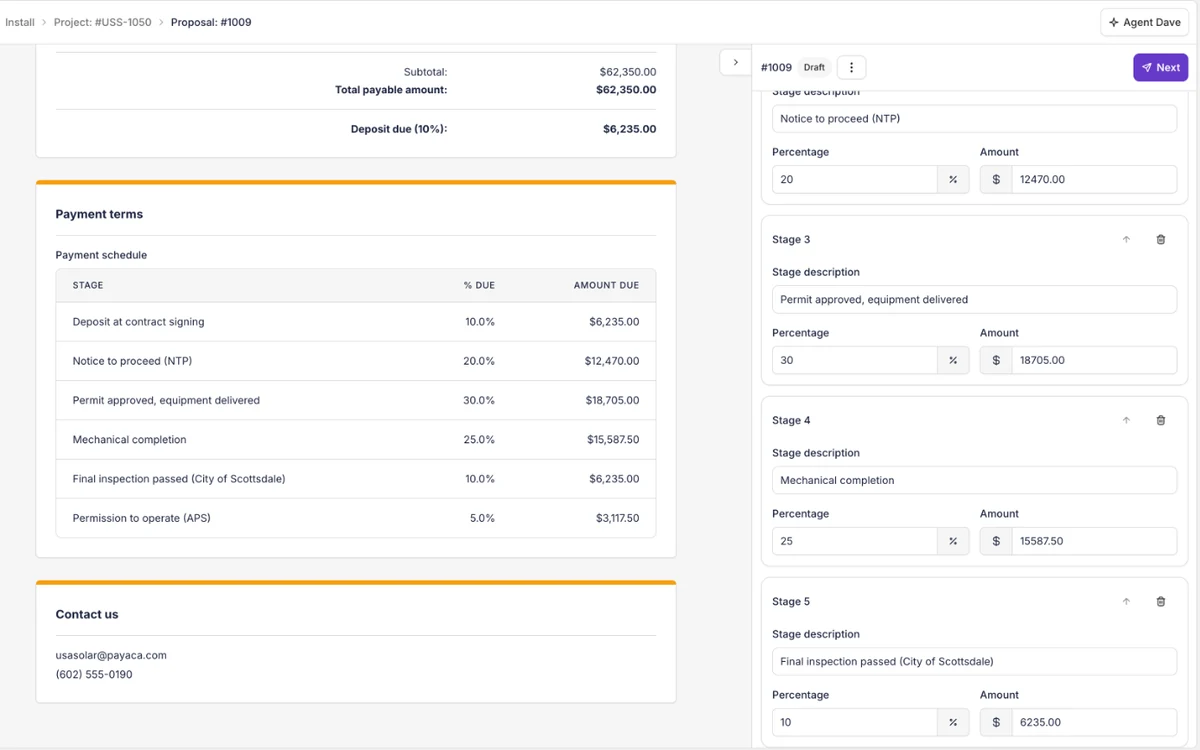
- You set up payment schedules tied to project milestones. For example, 20% at NTP, 30% at permit approval, 30% at substantial completion, and 20% at final inspection. Invoices can be triggered as milestones complete.
- How does Payaca handle change proposals?
- When scope changes mid-project, you create a change proposal that captures revised costs, updated margins, and timeline impact. Your team and the client both have a clear record of what changed and the financial implications.
- Can I present multiple system configurations to a client?
- Yes. Multi-option proposals with grouped line items let you present different configurations (a 100kW rooftop vs a 250kW carport with battery storage) on a single proposal. Clients compare options and accept digitally.
- Does Payaca handle both commercial and residential solar?
- Yes. You can configure separate pipelines for resi and C&I projects, each with their own stages, required fields, and document templates. Many installers use Payaca for both.
- How does Payaca help with AHJ permit tracking?
- Custom fields and pipeline stages let you track permits through each jurisdiction's specific requirements. You can link documents, set task reminders, and manage the full permit lifecycle within the project.
- How long does implementation take for a commercial solar business?
- Onboarding is guided and includes data migration. We map your specific project lifecycle, configure pipeline stages, set up payment schedules and train your team.
Ready to run your whole install business in one system?
Growing installers run their whole job on Payaca, from quote to final payment. We'll handle your workflow mapping and data migration.