String inverter vs microinverter: a guide for solar installers
String inverters vs microinverters: which should you recommend? An installer-focused comparison covering cost, performance, shading, monitoring, and when to use each.
Choosing between string inverters and microinverters is one of the most common design decisions in residential solar. The right choice depends on the property, the customer's priorities, and the installer's operational preferences.
For most UK residential installations on unshaded roofs, a string inverter with power optimisers offers the best balance of cost, performance, and serviceability. Microinverters are the better choice for complex roof layouts, significant shading, or customers who want panel-level monitoring. Neither is universally "better". The right answer depends on the specific installation.
A string inverter is a single centralised unit, typically wall-mounted near the consumer unit or in a garage, that converts DC electricity from a series-connected "string" of solar panels into AC electricity for the home.
Panels are wired in series to form strings. A typical UK residential system (3-4 kWp) might have a single string of 8-12 panels. Larger systems may use two or more strings connected to a single inverter or a multi-MPPT (Maximum Power Point Tracking) inverter.
SolarEdge, GoodWe, Solis, Fox ESS, and Huawei are among the most commonly used string inverters in the UK market. Many now include hybrid functionality for battery storage integration.
A microinverter is a small inverter attached to each individual panel (or sometimes shared between two panels). DC-to-AC conversion happens at the panel level, and AC power is sent directly down from the roof.
Each panel operates independently with its own microinverter. Panels connect in parallel on an AC bus cable that runs along the roof and down to the consumer unit. This means each panel's output is independent of every other panel.
Enphase dominates the microinverter market globally. AP Systems (APsystems) and Hoymiles are also gaining market share, particularly in the UK and European markets.
Power optimisers sit between string inverters and microinverters. They are DC-DC converters attached to each panel that optimise output before sending it to a centralised string inverter.
SolarEdge is the most well-known example. Their system pairs panel-level optimisers with a dedicated string inverter.
Exact pricing varies by manufacturer and supplier, but here is a general guide for a typical 4 kWp (10-panel) residential system:
Component
Approximate cost
String inverter only
£500 - £1,000
String inverter + optimisers
£1,200 - £1,800
Microinverters (10 units)
£1,500 - £2,500
The cost difference narrows on smaller systems and widens on larger ones. Labour time also differs: microinverter installs typically take 30-60 minutes longer due to per-panel mounting.
For installers, the key question is not just hardware cost but total project margin. Microinverter systems can command a premium from customers who value monitoring and shade tolerance, potentially improving margin despite higher component costs.
String inverter failures take the whole system offline, which means an urgent callback. Microinverter failures affect a single panel, which customers may not notice for weeks, meaning less urgent but potentially harder to identify without monitoring.
For installation businesses managing a growing portfolio of systems, the warranty and callback profile should factor into the recommendation. Fewer callbacks means lower servicing costs and better customer satisfaction.
The best inverter choice is the one that matches the specific installation. Rather than defaulting to one technology for every job, consider building a standard assessment into your site survey:
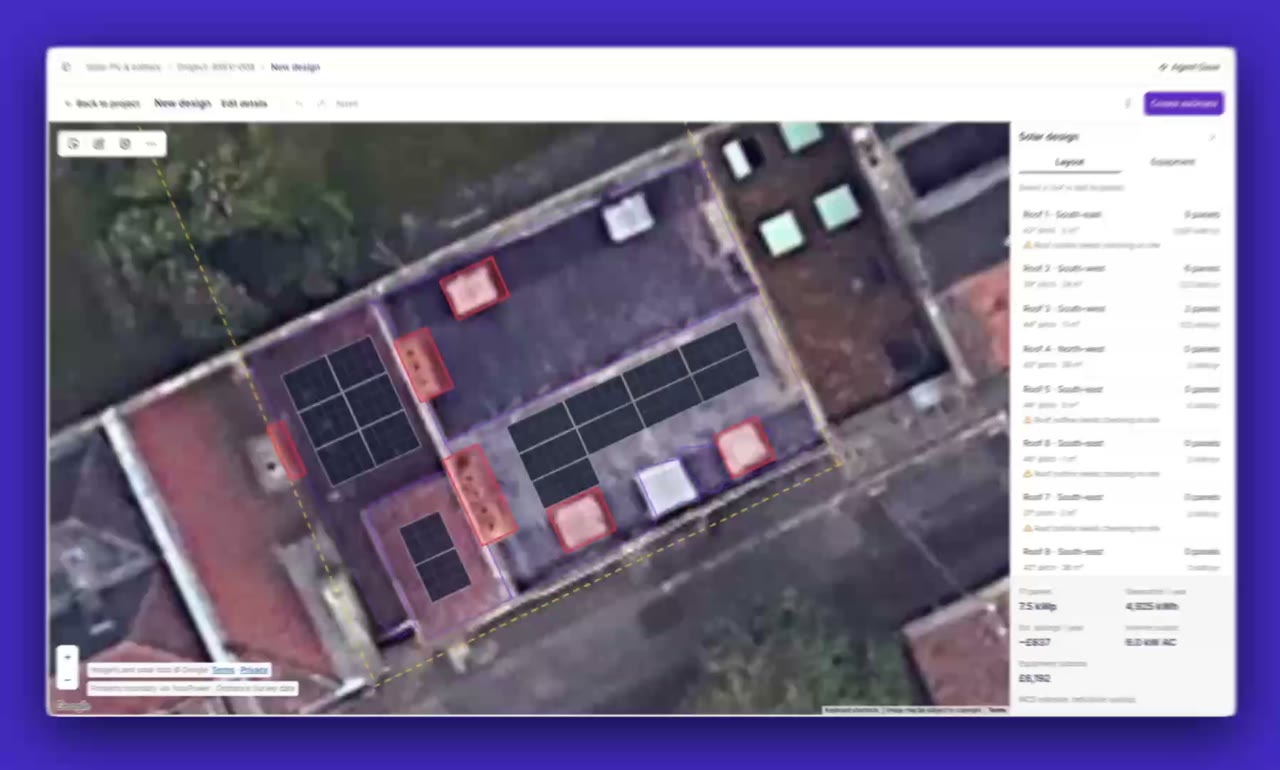
Assess shading using shading analysis tools during the survey, so the design and the quote come from the same data
Map the roof and count usable faces and orientations
Understand the customer's priorities: budget vs monitoring vs future plans
Factor in battery. If storage is planned, hybrid string inverters simplify the design
Consider your margin. Microinverters cost more but can command a premium, and margin per install is where solar businesses are won or lost
Whichever technology you recommend, being able to clearly explain the trade-offs builds trust with customers and reduces post-installation queries.
The inverter decision is just one part of a well-managed installation process. From initial design through to DNO applications and commissioning, having a system that tracks every job end-to-end helps you deliver consistently, regardless of the technology you install. Payaca does that for solar install businesses, and the survey data your team captures on site feeds straight into the quote.
The G99 Fast Track process connects small generation and storage installations in around 10 working days instead of a full G99 assessment. The three SGI categories, the forms, and the details that keep an application moving.
Irish install businesses evaluating job management software hit the same wall as UK ones, plus one more: most tools are configured for another market. What to check before you buy, from currency and VAT to grants and grid connections.