Heat pump installer income guide 2026: what MCS-certified businesses actually earn
Real income numbers for MCS-certified heat pump installer businesses in 2026. Day rates, annual turnover, BUS grant impact, and what a 5-person team can realistically earn.
Payaca is the operations platform for clean tech installation businesses.Book a demo →
Ben Clarke
Account Executive·29 June 2026·Last updated: 4 July 2026
If you're considering getting MCS-certified for heat pumps, or you're already certified and trying to work out whether your numbers stack up, the honest information is hard to find. Most articles either talk about the market in general terms or focus purely on what a single engineer earns. This is about the business: what a properly run heat pump installation company can turn over and take home.
Key numbers
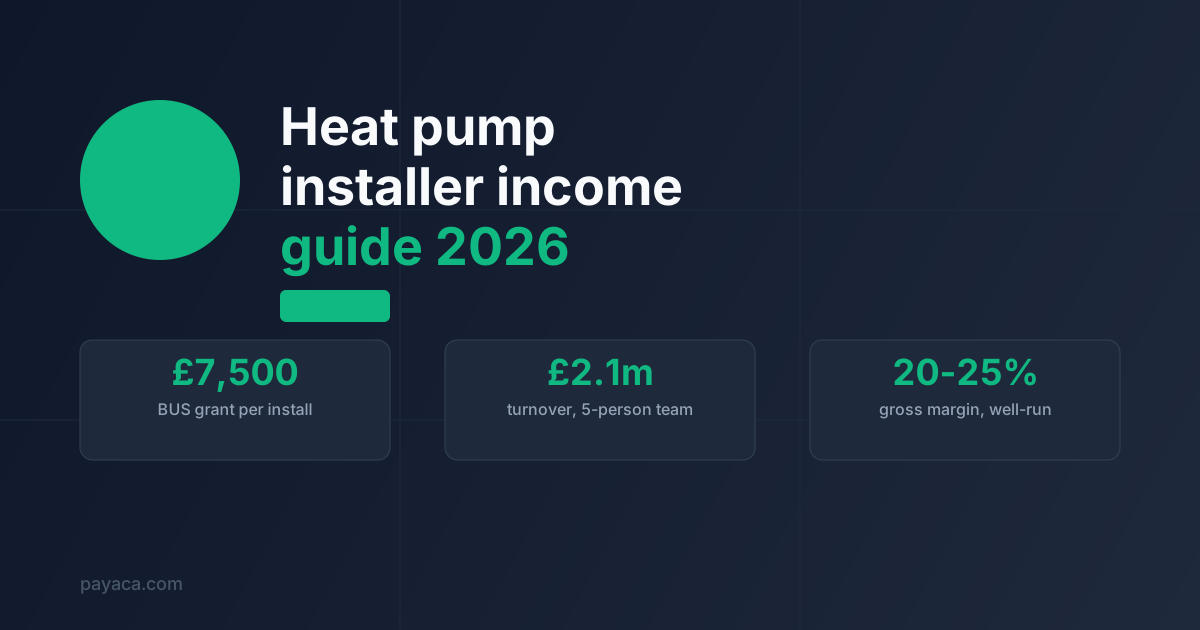
A 5-person heat pump business doing 15 installs/month turns over around £2.1m per year
At around 25% gross margin, that's roughly £530k gross profit before overheads
Two working directors in that business can expect £90-120k each after costs, PAYE, and dividends
The BUS scheme adds £7,500 per eligible job (£9,000 for oil/LPG homes from 21 July 2026) - but it typically takes 3-6 weeks after commissioning to land in your account
MCS certification costs £2,000-£4,000 upfront and takes 3-6 months to get operational
MCS certification unlocks two things: the right to install heat pumps under the Boiler Upgrade Scheme (BUS), and customer trust. Of those two, the BUS access is the financially material one.
The BUS grant is £7,500 for air source heat pumps and £7,500 for ground source. For homes heated by oil or LPG, a temporary uplift takes that to £9,000 for applications made on or after 21 July 2026, running to 31 March 2027 - directly relevant if off-gas-grid replacements are part of your pipeline. V5 of the scheme also added a £2,500 grant for air-to-air heat pumps in residential properties. The grant is paid to the installer, not the customer, and it's off the top of the job value. A £12,000 ASHP install with BUS applied means the customer pays £4,500 and the BUS pays you £7,500. You invoice the full amount; the grant comes separately.
Without MCS, you can't access BUS. You're also not credible to the homeowners who've done their research - and most heat pump buyers have. Uncertified installers do exist in the market, but they're competing on price against certified ones with a grant to offer. It's not a sustainable position.
The certification itself costs roughly £2,000-£4,000 through an MCS-approved certification body (NICEIC, NAPIT and OFTEC are the main ones for heat pumps), plus around £500/year in renewal fees. Until June 2026 you also needed membership of a consumer code, RECC or HIES, with its own cost and audit trail. That is no longer mandatory once you are on the redeveloped MCS Scheme, though it still applies on the legacy scheme until 31 March 2027. Add in the time cost of getting your processes and documentation up to standard - typically 3-6 months before you're actually issuing MCS certificates on jobs. For most businesses, the payback on that investment is fast once volume picks up.
A qualified heat pump engineer in the UK (MCS-competent, Level 3 plumbing or NVQ background, heat pump specific training) typically earns £38,000-£48,000 employed, with experienced engineers and team leads pushing past £50,000. Self-employed subcontract day rates run £250-£350 nationally, with £400+ achievable for specialist commissioning work in London and the South East.
Those numbers have moved up over the past two years as demand has outpaced supply. MCS data puts the number of certified heat pump businesses at around 2,000 - roughly 10,000 installers working within them - against a Government target of 600,000 installs per year by 2028 that will require considerably more. The supply of qualified engineers is the constraint, not the work.
For a business owner who's also a working engineer, the income conversation is more nuanced - you're not just earning a day rate, you're building an asset and carrying the risk. That's covered in the turnover section below.
A typical small heat pump business running at scale looks like this:
Role
Headcount
Working directors (engineer + sales/ops)
2
Lead engineer
1
Apprentice/mate
1
Admin/survey coordinator
1
Two engineers on site (plus apprentice support) can complete one ASHP install in 2-3 days depending on complexity. That's roughly 6-8 jobs per engineer pair per month, or 10-15 jobs for the full team with the directors taking some installs and some office/sales time.
At 15 ASHP installs per month on a £12,000 average contract value:
Per month
Per year
Revenue
£180,000
£2,160,000
Cost of goods (kit, labour, sub)
£136,000
£1,632,000
Gross profit (25%)
£44,000
£528,000
Overheads for a business at this size - vans, insurance, office admin, software, lead generation, accountancy - typically run £120-160k per year. That leaves a net profit of £370-400k before director salaries and tax.
Two working directors drawing £50k PAYE each leaves £270-300k to distribute as dividends or retain in the business. After income tax and dividends tax at that level, each director takes home roughly £90-120k.
The BUS cash flow trap
BUS money only lands after MID registration and Ofgem approving the redemption - Ofgem's published turnaround is around 12 working days for review plus payment on a weekly schedule, so a tightly run job sees the grant 3-6 weeks after commissioning, and longer if MID registration slips. At roughly a month end-to-end on 15 jobs per month, you've got £112,500 of BUS money in transit at any given time. That's a working capital requirement most new businesses don't price in at the start.
The numbers above assume a tightly run operation. The gap between 20% gross margin and 10% gross margin on the same revenue is about £220,000 a year. The main drivers:
Volume is the biggest lever. Going from 15 to 20 installs/month with the same fixed overhead base adds around £720k of annual revenue - and because the overheads barely move, the £150-180k of extra gross profit mostly drops to the bottom line.
Average job value matters more than it looks. Mixing in some GSHP installs (£18,000-25,000 contract value) or pairing heat pumps with battery storage or hot water heat pumps lifts the average meaningfully. A business running at £15,000 average vs £12,000 average is 25% better off on the same install count.
Survey accuracy hits margin directly. If your heat loss calculations are off and you're revisiting or upgrading equipment post-install, you're eating that cost. Getting the survey methodology right - and documenting it consistently - is where the margin is protected.
Retentions and snagging are the hidden cost in a growing business. One job with a complicated snagging dispute can absorb 10-15 hours of engineer time. Process and documentation reduce the incidence; having commissioning records and handover sign-offs protect you when they happen anyway.
Employed engineers or subcontractors is a decision that hits income and scalability differently. Employed staff cost more in base terms (salary, employer NI, pensions, holiday pay) but you control the schedule and the training. Subbies give you flexibility but they're harder to build a consistent quality system around, and in a tight labour market they'll work for whoever pays most.
Most growing heat pump businesses move from subcontractors toward employees around the 8-12 installs/month mark, when the scheduling predictability is worth the overhead.
The businesses that scale past £3m turnover are generally ones that have solved two things: a repeatable survey and quoting process that doesn't fall apart when the director isn't doing it personally, and an MCS compliance process that doesn't create a backlog after every busy month. Both of those are process problems before they're tech problems - but once the process exists, software to run it at scale makes a real difference.
If you're looking at how other heat pump businesses manage MCS compliance and quoting at volume, book a demo with Payaca and we can show you what that looks like in practice.
Ready to streamline your operations?
See how Payaca helps clean tech installers save time and grow their business.
England relaxed permitted development for air source heat pumps, but the right hinges on an MCS 020 noise assessment under 42 dB(A). A practical guide for UK installers on what changed and where jobs slip into a full planning application.
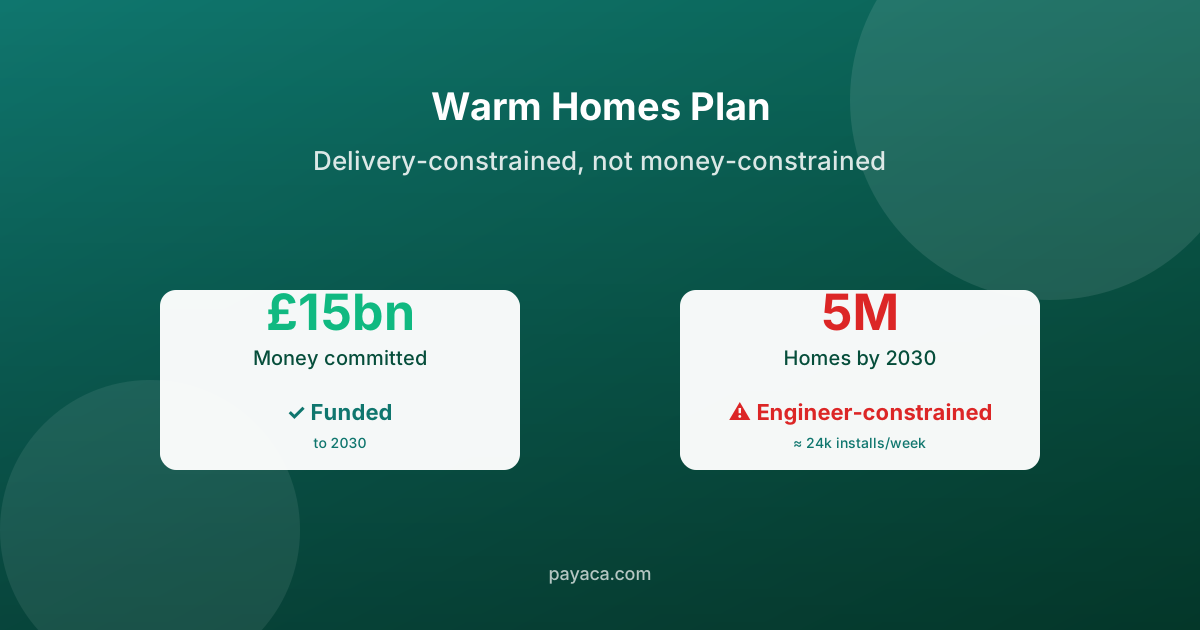
The £15bn is real. The 5-million-homes target is real. What's missing is the engineers. For UK heat pump installers, the next four years are an installer-capacity market - and the operations playbook that wins it is different from the one that won 2024.
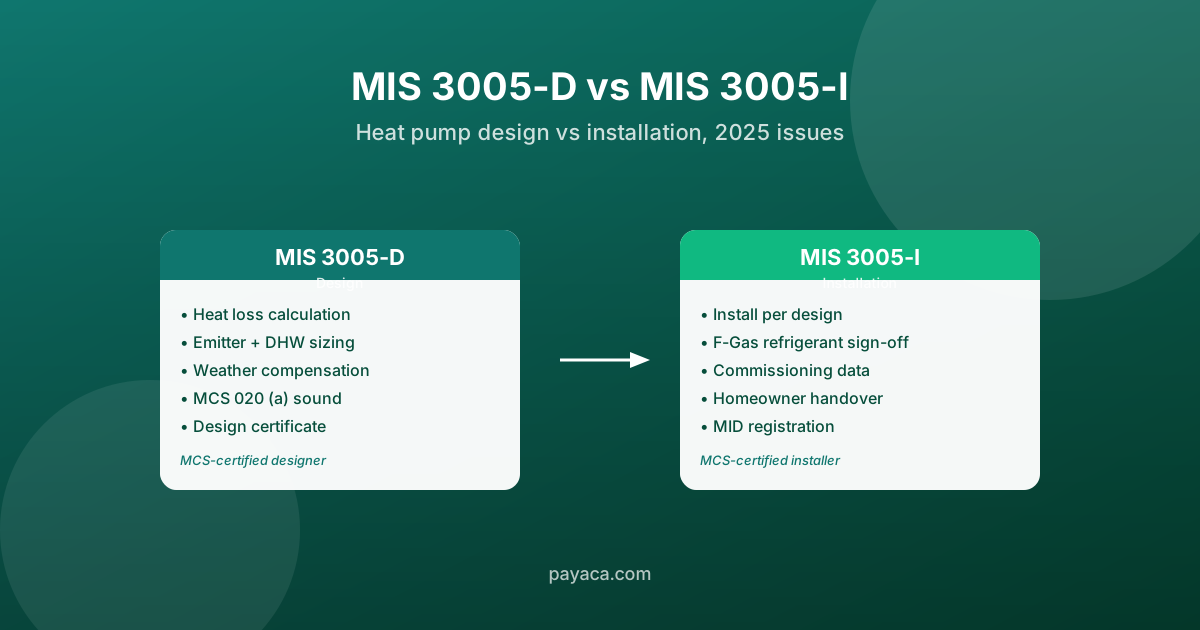
MIS 3005 split into two documents on 1 April 2022 - one for design, one for installation. Most growing UK heat pump installers still treat them as one workflow, and that's where the data leaks. A practical guide to the design-to-install handoff for scaling installers.