Blog
Why we built Glow and Flow
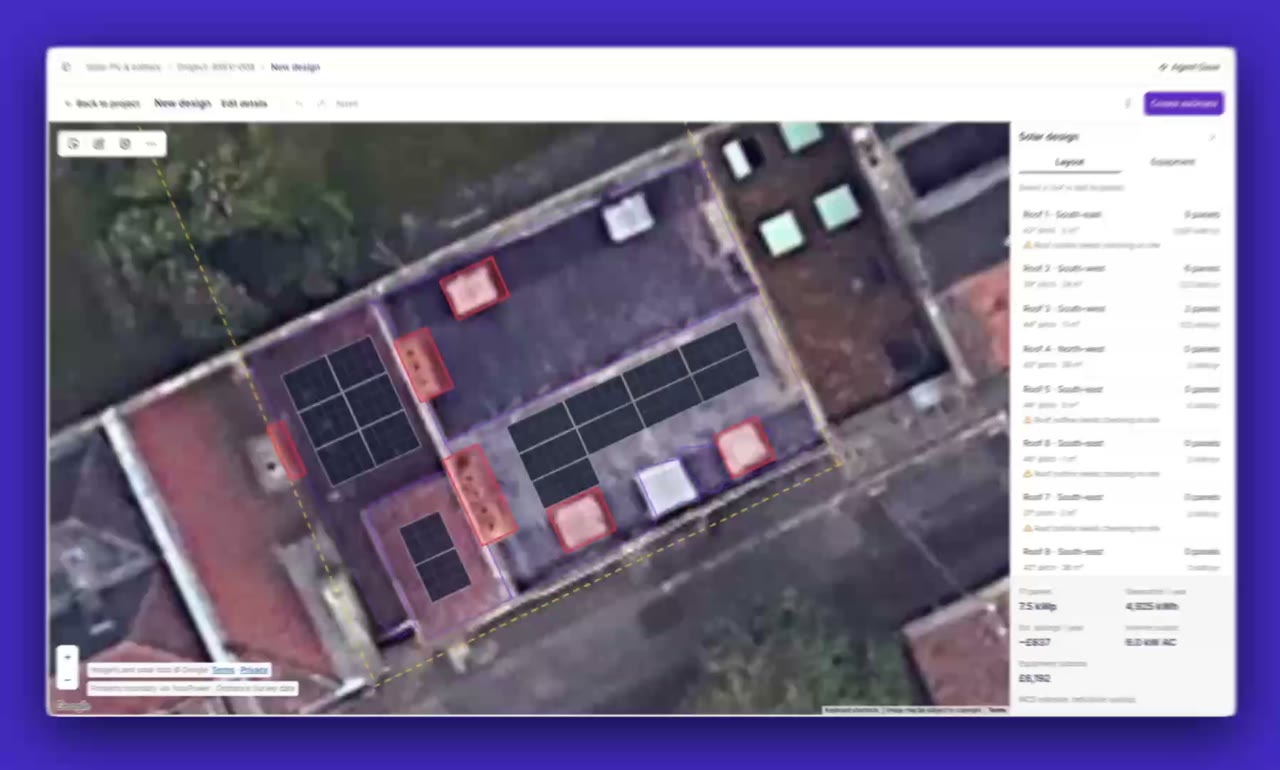
Why Payaca built solar design and heat pump estimates into the system installers run the job in, and why we're still open to the tools you use.
Understanding the global solar panel supply chain - from raw materials to final assembly. Learn where components originate and what this means for the industry.
This is one of the questions installers field most often on the doorstep, usually somewhere between the quote and the deposit. Being able to answer it clearly, alongside which panel type you have specified and why you chose that inverter, is part of what separates a confident sale from a stalled one.
When examining where solar panels come from, we need to consider two questions: where do the raw materials originate, and where does final assembly occur? The answer to both is predominantly China - according to the IEA's 2022 report, China dominates every stage of the global solar supply chain.
Silicon comprises 75-85% of solar panels and is the most critical component. China produces 83% of global polysilicon, with 45% coming from Xinjiang alone. Germany produces 6.9% and the USA produces 6.1%.
Solar panel glass is produced globally from silica sand. China leads production with 64,000 metric tons per day capacity as of 2022. The Asia-Pacific region represents the fastest-growing market.
Used for panel frames, aluminium production is heavily concentrated in China, which controls 60% of primary production. Europe has lost over 65% of its aluminium production capacity in recent years.
This encapsulant material protects solar cells. The Asia-Pacific market currently represents 65% of global EVA production. It's derived from crude oil and natural gas.
Essential for wiring and heat exchangers, copper is one area where production is more distributed. Chile leads global production with over 5.8 million metric tons annually.
Solar panels consumed 13.8% of total silver usage in 2023, predicted to reach 20% by 2030. Mexico produces 25% of global silver supply.
Made from polymer combinations, back sheets are produced across China, Vietnam, India, the US, and Europe - one of the more geographically distributed components.
China is the world's largest manufacturer and assembler of solar panels, producing 52% of global output. Major companies include:
Production centres are concentrated in Jiangsu, Zhejiang, Anhui, and Guangdong provinces.
US-based manufacturers include First Solar, Qcells, Silfab Solar, SunPower, and Tesla's SolarCity. Facilities operate in California, Ohio, and Arizona. Some operations are entirely US-based without Chinese materials.
German manufacturing includes SolarWorld (now a SunPower subsidiary) with facilities in Freiberg and Bitterfeld-Wolfen.
Domestic UK manufacturing is extremely limited. Only GB-Sol currently holds Made in Britain verification, operating facilities in South Wales. Most UK-associated manufacturers outsource production internationally.
Evidence suggests forced labour in Xinjiang's polysilicon production facilities. Similar concerns exist regarding cobalt mining for battery storage systems. These issues have prompted some buyers to seek verified ethical supply chains.
Coal generates over 60% of the electricity used for global solar PV manufacturing. Manufacturing has contributed approximately 51,900 kilotonnes of carbon dioxide over the past decade, with China accounting for 87% of these emissions.
However, context matters: solar panels produce 20 times less carbon emissions than coal-generated electricity over their lifetime.
China's market dominance creates supply chain vulnerabilities and potential price control risks. This concentration can disadvantage smaller domestic manufacturers and creates geopolitical dependencies.
Truly localised solar panel production remains rare. Rather than focusing solely on manufacturing origin, consumers and installers should evaluate:
Supporting manufacturers committed to supply chain transparency helps drive industry-wide improvements regardless of production location.
For an install business, the practical version of all this is being able to show it. Customers who ask where the panels come from are usually asking a different question underneath: can I trust what you are putting on my roof?
The installers who handle that well tend to have the answer built into the proposal rather than delivered from memory on the day, with the manufacturer, the spec and the warranty terms set out in the quote itself. It also means the person who surveyed the job and the person who installs it are working from the same record.
If you are weighing up how to run that end-to-end, we compared the software solar installers actually use and where the margin goes on a typical job. Payaca is built for solar install businesses specifically, and you can book a 20-minute demo to see how it handles quoting, compliance and scheduling in one place.
See how Payaca helps clean tech installers save time and grow their business.
Book a demoWant more from Payaca in your Google results?
Why Payaca built solar design and heat pump estimates into the system installers run the job in, and why we're still open to the tools you use.

HubSpot wins solar, heat pump and EV installers on the way up - and loses them as soon as the install team starts using it. Five patterns we keep seeing in migration calls.

Salesforce, HubSpot, and ServiceTitan weren't built for clean tech. Here's what happens when installers switch to a purpose-built platform.