
Blog
Why we built Glow and Flow
Why Payaca built solar design and heat pump estimates into the system installers run the job in, and why we're still open to the tools you use.
Where is solar energy headed? From perovskite cells to agrivoltaics, we cover the technology, policy, and market trends shaping the future of solar power in the UK and globally.
Solar energy has gone from a niche technology to the cheapest source of electricity in history. The IEA confirmed that renewables became the largest source of global electricity generation in 2025, with solar leading the charge.
The future of solar power is defined by three forces: rapidly advancing cell technology pushing panel efficiencies above 30%, government policy committing to massive deployment targets, and falling costs making solar the default energy choice. For UK installers, this means sustained growth in demand, and the businesses that can scale their operations efficiently will capture the most value.
The UK surpassed 17 GW of installed solar capacity in 2024, with rooftop residential and commercial installations accounting for roughly half of that total. Solar now generates enough electricity to power millions of homes during peak summer months.
But the current trajectory is not enough. NESO's Future Energy Scenarios model a need for 47 GW of solar capacity by 2030 to meet the UK's clean power targets. That means nearly tripling installed capacity in under six years.
Getting from 17 GW to 47 GW requires a significant acceleration in annual installations, from roughly 2-3 GW per year to 5-6 GW per year. That is a challenge, but it is also a massive market opportunity for installation businesses positioned to grow.
Globally, solar is no longer competing with fossil fuels on cost. It has won. The IEA's World Energy Outlook identified solar as the cheapest source of electricity ever produced, and global solar capacity additions exceeded 400 GW in 2024 alone.
Key global milestones:
The scale of manufacturing has driven module prices to historic lows, which benefits installers everywhere but also increases competitive pressure to run efficient operations.
The most significant technology shift on the horizon is perovskite-silicon tandem cells. These layer a perovskite material on top of a conventional silicon cell, capturing different parts of the light spectrum.
Oxford PV began commercial production of perovskite tandem cells in 2024, achieving efficiencies above 26%, meaningfully higher than standard silicon panels at 22-23%. Laboratory records have exceeded 33%.
For installers, the practical impact will be:
Expect perovskite tandems to move from premium product to mainstream option over the next 3-5 years.
Solar roof tiles, solar facades, and solar glazing are moving from concept to commercial reality. Companies like Marley and Wienerberger now offer solar roof tiles that integrate with standard roofing materials.
BIPV opens up installation opportunities on buildings where traditional panels are not suitable: listed buildings, conservation areas, and architecturally sensitive projects. It also creates new installation skills requirements and potentially higher-value projects.
Transparent photovoltaic glass can generate electricity while still allowing light through. Research efficiencies are still modest (around 10-12%), but the addressable surface area is enormous. Every window, skylight, and glass facade becomes a potential energy source.
This technology is still 5-10 years from widespread commercial deployment, but it signals where the industry is heading.
Agrivoltaics is the practice of installing solar panels above agricultural land in a way that allows farming to continue underneath. Elevated panel structures allow crops or livestock to coexist with solar generation, and the approach is gaining traction across Europe.
The UK government has signalled support for dual-use land, and several large-scale agrivoltaic projects are now in planning. For commercial installers, this represents a new and growing market segment.
The government's new publicly-owned clean energy company, GB Energy, has been established with a mandate to accelerate renewable deployment. While its primary focus is on large-scale generation and community energy, the ripple effects benefit the entire solar supply chain, including installers.
The Solar Taskforce, bringing together industry, government, and grid operators, is working to remove barriers to solar deployment. Key focus areas include:
There is increasing policy attention on rooftop solar specifically. The combination of energy security concerns, net zero targets, and consumer demand is driving policy towards making rooftop solar easier to install and more attractive to homeowners.
For installers, this policy environment means sustained demand growth, but it also means the businesses that can handle more volume efficiently will be the ones that benefit most.
Solar module costs have fallen by over 90% in the past 15 years, and the trend continues. While module costs are already low, balance-of-system costs (inverters, mounting, wiring) and soft costs (design, permitting, sales) now represent the majority of installation cost. This shifts the competitive advantage towards installers who can reduce their operational costs.
The pairing of solar with battery storage has become standard practice for residential installations. Battery attach rates in the UK now exceed 60% for new residential solar installations, driven by time-of-use tariffs and energy independence motivations.
For installers, this increases average project value but also adds complexity to design, procurement, and compliance processes.
Utility-scale solar farms continue to grow, but the grid connection backlog remains a significant bottleneck. Many commercial and grid-scale projects face multi-year waits for connection, which has shifted some investment focus back to distributed (rooftop) solar where grid constraints are less severe.
The solar market is set for sustained, significant growth. But growth creates its own challenges:
| Opportunity | Challenge |
|---|---|
| More customers wanting solar | Managing higher lead volumes efficiently |
| Higher project values (solar + battery) | More complex design and compliance per job |
| Policy support driving demand | Workforce and skills shortages |
| Technology improvements | Keeping up with new products and methods |
The installers who will capture the most value from this growth are those with systems that can scale. Businesses that can handle more jobs without proportionally increasing their admin overhead will pull ahead.
That means having clear visibility across your pipeline, automated compliance workflows, and efficient job management from quote to commissioning.
As the solar market grows, the bottleneck for most installation businesses is not demand. It is operational capacity. The companies that invest in scalable systems now will be the ones best positioned to capture market share.
Related reading: Software for solar installers | Solar compliance automation | Book a demo
See how Payaca helps clean tech installers save time and grow their business.
Book a demoWant more from Payaca in your Google results?
Why Payaca built solar design and heat pump estimates into the system installers run the job in, and why we're still open to the tools you use.

HubSpot wins solar, heat pump and EV installers on the way up - and loses them as soon as the install team starts using it. Five patterns we keep seeing in migration calls.
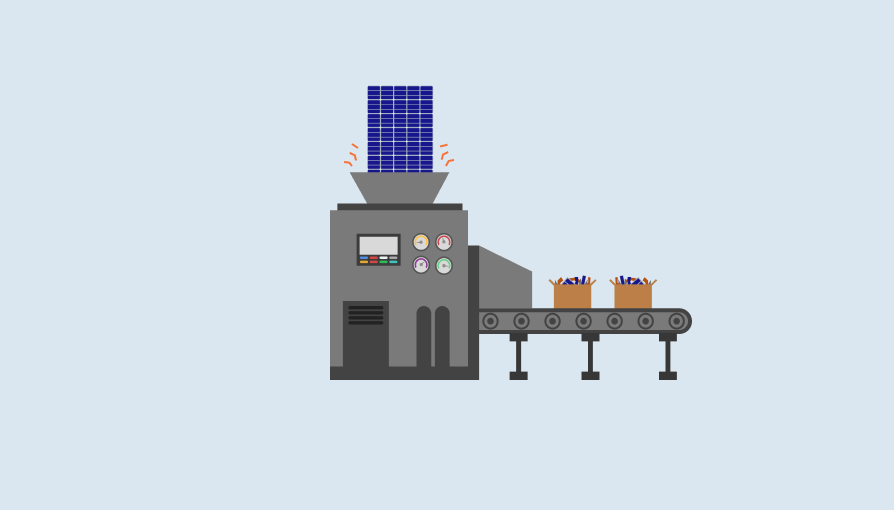
Breaks down how solar panels are recycled and some of the challenges involved in the recycling process. This article covers specific examples from the UK as well as predictions about where the industry is headed.