Solar PV commissioning under MCS: from survey to sign-off
What an MCS-certified solar installer has to produce by commissioning sign-off - MIS 3002 evidence, IEC 62446 tests, the EIC, DNO notification, MID registration within 10 working days, and a handover pack that unlocks the customer's SEG application.
Payaca is the operations platform for clean tech installation businesses.Book a demo →
Jamie Duncan
Head of Customer Operations·2 July 2026·Last updated: 4 July 2026
Ask a solar installer where a job goes wrong and they'll talk about scaffolding delays or a DNO sitting on an application. Ask their office manager and you'll get a different answer: the fortnight after the panels go on the roof, when the certificates, registrations, and notifications all come due at once and the evidence needed to complete them is scattered across an engineer's phone, a van, and three email threads.
Commissioning is where a solar job either closes cleanly or drags. For an MCS-certified business running 15 or more installs a month, it's also the biggest compliance exposure in the operation. The customer can't claim Smart Export Guarantee payments until you've registered the install. Your MCS accreditation depends on the paperwork standing up to audit. And every day between install and sign-off is a day you probably haven't invoiced the balance.
Key points
By commissioning sign-off, a domestic solar job needs MIS 3002 compliance evidence, IEC 62446 test results, a BS 7671 Electrical Installation Certificate, Building Regulations notification, DNO notification or commissioning confirmation, and MCS Installation Database (MID) registration
MID registration is due within 10 working days of commissioning - and the customer's SEG application depends on the certificate it produces
Most commissioning problems are data-capture problems: the test result or photo wasn't recorded on site, so the office chases the engineer for weeks
G98 jobs are notified after commissioning; G99 jobs need approval before install and confirmation after - mixing up the two is a common audit finding
A tight commissioning workflow gets the handover pack out within 48 hours and the balance invoice out with it
If your office is still chasing engineers for test results and photos after every install, book a demo and we'll show you how solar installers run commissioning capture on site in Payaca.
MCS certification for solar PV means installing to MIS 3002, and MIS 3002 is specific about what the installed system has to be and what the customer has to receive. By the time you sign the job off, the file should contain:
Commissioning test results to IEC 62446-1. Open-circuit voltage and short-circuit current per string, insulation resistance on the DC side, earth continuity, polarity checks, and functional tests of the inverter and isolators. These aren't optional extras - they're the evidence the system performs as designed.
A BS 7671 Electrical Installation Certificate. The EIC covers the fixed wiring work. A solar install without one is an incomplete job, and it's one of the first documents an auditor or a buyer's solicitor asks for.
Building Regulations notification. Part P applies to the electrical work in a dwelling. If you're registered with a competent person scheme such as NICEIC or NAPIT, the scheme handles notification. If not, building control needs to know before work starts, which is a much worse place to be.
DNO paperwork matching the connection route. A G98 install (up to 3.68kW per phase) can connect first and notify within 28 days. Anything bigger goes through G99: approval before installation, then commissioning confirmation after energisation. Sending a G98 notification for what is actually a G99 job doesn't just create rework - it means the system was energised without permission.
MID registration within 10 working days of commissioning. The MCS Installation Database entry generates the MCS certificate. Until it exists, the install officially didn't happen.
Consumer code evidence. Domestic MCS work requires membership of RECC or HIES, and the codes carry their own paper trail: compliant contract, deposit protection where one was taken, and an insurance-backed guarantee on the workmanship warranty.
The MCS certificate isn't just your compliance record - it's the customer's key to getting paid. SEG licensees require MCS certification (or an equivalent scheme such as Flexi-Orb) before they'll approve an export tariff application, and for an MCS install the MID certificate is that evidence. A slow MID registration directly delays your customer's first export payment, and they will ring you about it.
Almost every commissioning delay traces back to something that should have been captured weeks earlier. The DNO application needs inverter and panel specifications, so a survey that doesn't pin down the exact kit means the G99 application waits on a design decision. Shading analysis and roof measurements from the survey feed the performance estimate that MIS 3002 requires you to give the customer before contract. If the surveyor recorded "south-ish roof, some shading from next door" in a notebook, someone in the office is now redoing that work from Google Maps.
The fix is structural rather than heroic. Decide once what data the survey must capture - roof dimensions and orientation, shading survey, existing consumer unit condition, supply details for the DNO application, photos of everything - and make those fields required before a survey can be marked complete. Same discipline at design: the performance estimate, string design, and specified components get locked before anything is ordered, because those exact details flow into the DNO application, the commissioning tests, and the MID entry.
The engineer on the roof is doing two jobs. One is installing a solar PV system. The other is producing the evidence that lets the office close the job, and the second one is the job that usually gets skipped when it's 4pm and raining.
The IEC 62446 test results are the core of it. String voltages and currents, insulation resistance, earth continuity - recorded per string, with the meter readings, not "all fine" scrawled at the bottom of a sheet. Add labelled photos: the array, the inverter installation, DC isolation, the generation meter, the consumer unit after works, and the DC labelling that BS 7671 and MIS 3002 both expect. If any of that leaves site only in the engineer's head, the office finds out during MID registration, and the choice becomes chase the engineer for a week or book a return visit that costs £200-£400 in unbilled time.
Field capture is the difference between the two. When the commissioning checklist lives on the engineer's phone with required fields and photo prompts, the data arrives in the office the moment the engineer signs off, and sign-off can't happen with gaps in it.
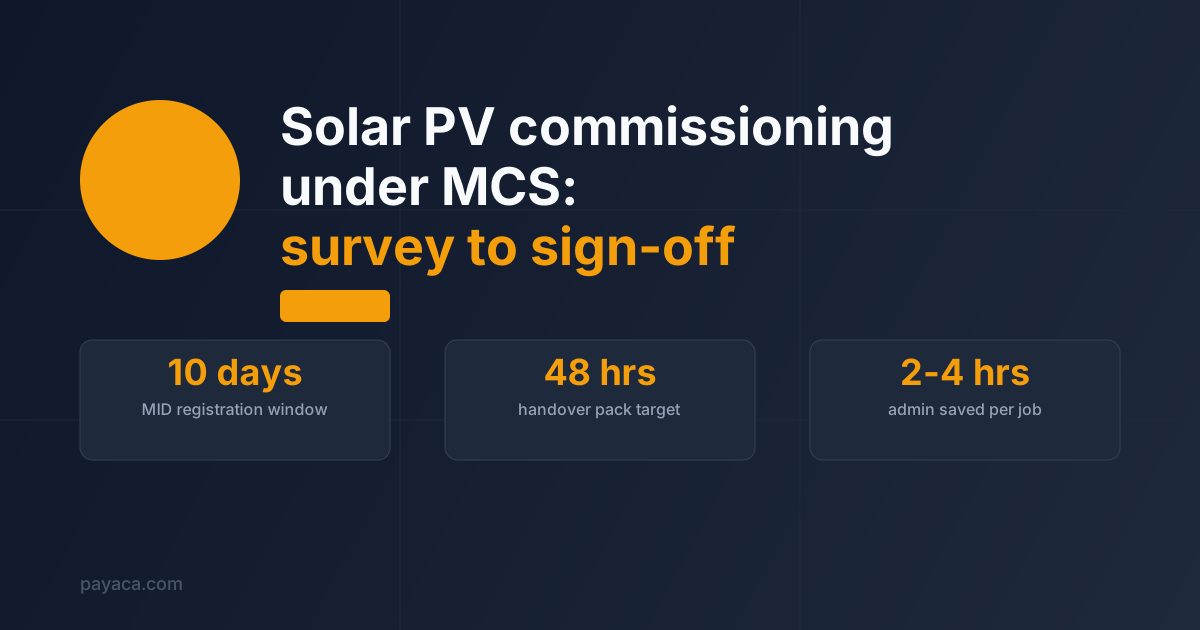
MID registration within 10 working days of commissioning is the hard deadline in the process, and it's the one worth building the workflow around. Everything the entry needs - system size, component details, test results, commissioning date - already exists by the end of install day if the capture upstream was done properly. Registration then takes minutes, the MCS certificate follows, and the customer's SEG application is unblocked inside a week of the scaffold coming down.
Miss the window and the problems compound quietly. The customer's export payments are delayed and their first call is to you. Late or corrected MID entries are exactly the pattern MCS audits look for, because they signal the data behind the registrations is weak. And the balance invoice tends to wait for the certificate, so slow registration is slow cash for no reason other than process.
MIS 3002 and the consumer codes both expect the customer to walk away with a complete pack: the MCS certificate, the EIC, DNO notification or approval evidence, a system schematic, component datasheets, warranty terms for panels, inverter, and workmanship (with the insurance-backed guarantee documentation), a shutdown and isolation procedure, and guidance on applying for SEG payments.
Assembling that from scratch per job is an afternoon of admin. Generating it from the data already captured at survey, design, and commissioning is a template and a click. The pack going out within 48 hours of commissioning, with the balance invoice attached, is what a clean close looks like - and it's the version of your business the customer describes when a neighbour asks who did their panels.
Average days from commissioning to MID registered - more than 5 working days means you're flirting with the deadline on every job.
How many MID entries in the last quarter needed correcting after submission?
How many jobs needed a return site visit to collect missing test data or photos?
How many handover packs went out within 48 hours of commissioning?
How many G99 jobs had commissioning confirmation submitted the week of energisation?
Average days from commissioning to balance invoice sent?
If two or more of those numbers make you wince, the gap isn't engineer diligence - it's that your process depends on people remembering things instead of a system requiring them.
Payaca is built for exactly this shape of problem: required custom fields on survey and commissioning checklists so evidence gets captured on site, automated G98 and G99 applications and commissioning submissions pre-filled from project data, and document templates that turn captured data into the EIC pack, MID export, and homeowner handover without re-keying. Installers running commissioning this way get certificates out in days rather than weeks and reclaim 2-4 hours of admin per job.
Book a demo and we'll walk through your commissioning process end to end.
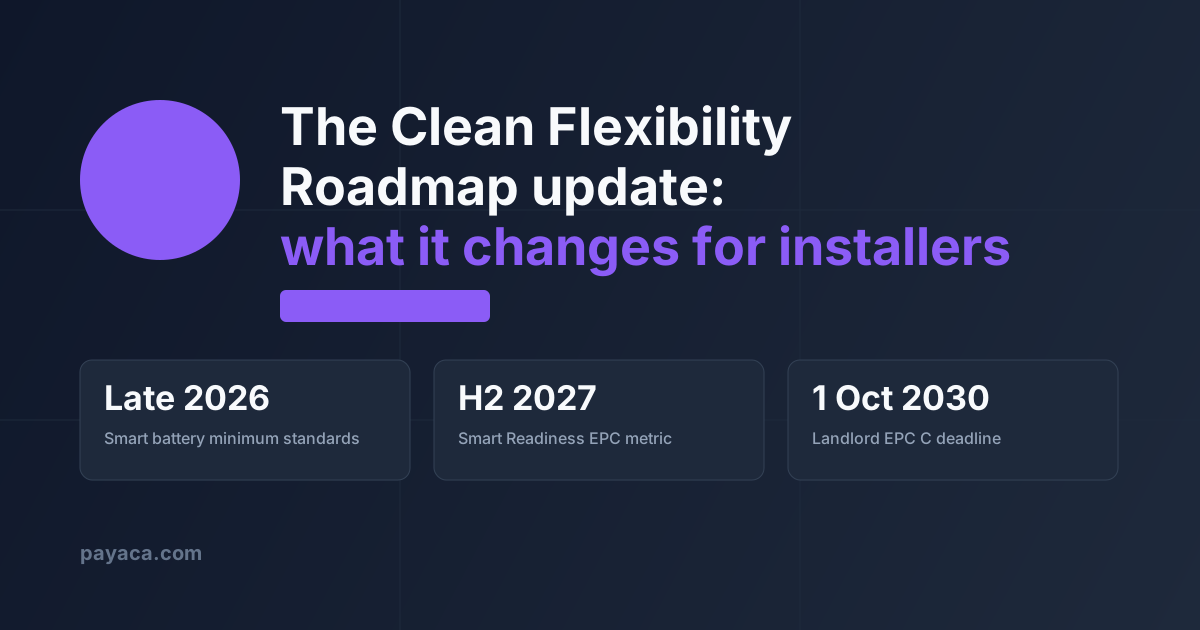
July's Clean Flexibility Roadmap update sets dates that will reach installers' quotes: minimum standards for smart batteries later in 2026, a Smart Readiness EPC metric in 2027, and a landlord deadline in 2030. What to do about each.
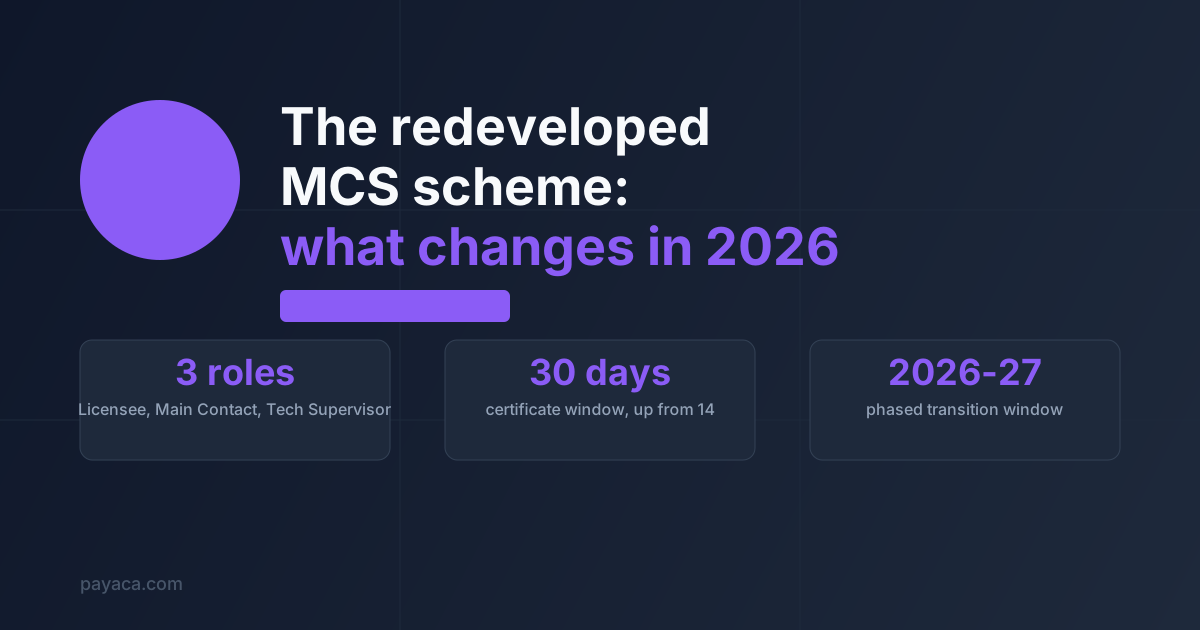
MCS is moving every certified installer onto its redeveloped scheme through 2026. The three business roles you must assign, the risk-based assessment model, and what to have ready before your certification body starts your transition.
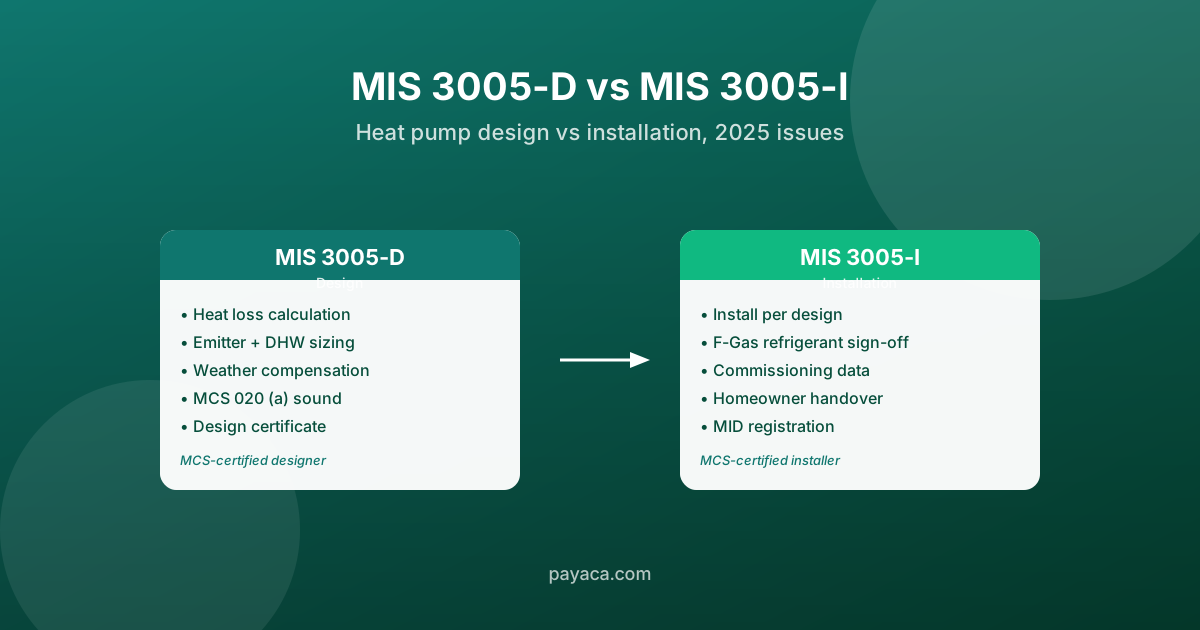
MIS 3005 split into two documents on 1 April 2022 - one for design, one for installation. Most growing UK heat pump installers still treat them as one workflow, and that's where the data leaks. A practical guide to the design-to-install handoff for scaling installers.