Solar installer economics: where the margin actually goes
A practical breakdown of where UK solar installer margin is won and lost - from survey to DNO energisation. Covers the real cost of quoting, MCS and DNO admin, on-site overruns, and how growing installers protect 20% margins as volume scales.
Payaca is AI-native software for clean tech installers. One system, with Agent Dave, the AI built into Payaca, doing the work.Book a demo →
Jamie Duncan
Head of Customer Operations·15 June 2026·Last updated: 4 July 2026
The solar installers I speak to in the 15-50 install-per-month range almost all ask the same question: "Why is the margin worse than I expected?" The answer is rarely the panels or the labour rate. It's almost always admin and on-site time that nobody's pricing.
A well-run solar installer can hold a 20% gross margin at scale. A poorly-run one sits closer to 8-10% and doesn't know why. The gap is operational, not commercial. The panels cost the same for everyone; what differs is how much unbilled time goes into winning, registering, and closing out each job.
Key points
Solar installer margin is made and lost in the quote-to-energisation journey, not the panel price
The hidden cost centres are survey accuracy, MCS and DNO paperwork, on-site overruns, and post-install compliance chase-ups
£200-£500 of admin time is baked into every job before anyone climbs onto a roof
The DNO application is the single biggest margin variable nobody plans for - a refusal or delay can hold a job for weeks
At 20+ installs per month, manual processes cost more than software does
See it for yourself
If any of this sounds familiar, book a 20-minute walkthrough and we'll show you how growing solar installers use Payaca to protect margin as they scale.
Start with a typical residential solar PV and battery install: a 4.4kWp array with a 5kWh battery, sold at £9,500 (domestic solar and storage is zero-rated for VAT in the UK until 2027). Gross revenue to the installer is £9,500.
A healthy job economics breakdown looks something like this:
Cost centre
Typical spend
% of revenue
Panels, inverter, battery, mounting and cabling
£3,700
39%
Install labour (2 days, 2-3 person crew)
£1,200
13%
Scaffolding
£550
6%
Electrical and DNO commissioning labour
£350
4%
Survey and design time
£300
3%
Quoting and sales admin
£250
3%
MCS, MID and DNO paperwork
£350
4%
Commissioning, SEG registration, certificates, handover
£300
3%
Travel, parking, fuel
£150
2%
Sales overhead (marketing, leads)
£450
5%
Total cost
£7,600
80%
Gross margin
£1,900
20%
That's what a tight operation looks like. Now look at where it slips.
The single biggest drag on margin for growing solar installers is time-per-quote. If you're spending 2-3 hours producing a proposal from scratch - sizing the array, modelling generation and shading, picking inverter and battery, formatting a document - you're losing money before the install is even booked.
At a 25% conversion rate, every install you win sits on top of four quotes - so three hours per quote is really 12 hours of effective quoting time per job. If your office hourly cost is £40, that's £480 of quoting labour on a single job - nearly double the £250 "quoting and sales admin" line in the table above.
The installers holding 20% margin have done three things here:
Standardised the survey - fixed inputs, a consistent roof and shading assessment, the same format every time
Templated the quote - panel and battery bundles pre-priced, scaffolding and labour costed in days not hours, SEG and warranty handled as standard line items
Moved to option-based proposals - the customer picks "good / better / best" (PV-only, PV plus battery, larger array) from one document instead of three rounds of back-and-forth
The result is quote turnaround going from three days to same-day, and quote-build time going from hours to under 30 minutes. That alone is worth 4-6% of margin on every job.
Why the design inputs matter beyond the quote
The roof measurements, array layout, and DC/AC sizing you capture at survey aren't just for the proposal - they drive the MCS performance estimate (MIS 3002), the DNO application, and the commissioning paperwork. Capture them once, cleanly, and they flow through every downstream document. Re-key them three times and you've built three chances to get the address, panel count, or inverter rating wrong.
Every grant- or SEG-eligible install has to be registered on the MCS Installation Database, and almost every install needs a Distribution Network Operator (DNO) application. This is not optional and it is not quick. The average installer spends 2-4 hours per job on:
MCS performance estimate and design evidence (MIS 3002)
MID registration
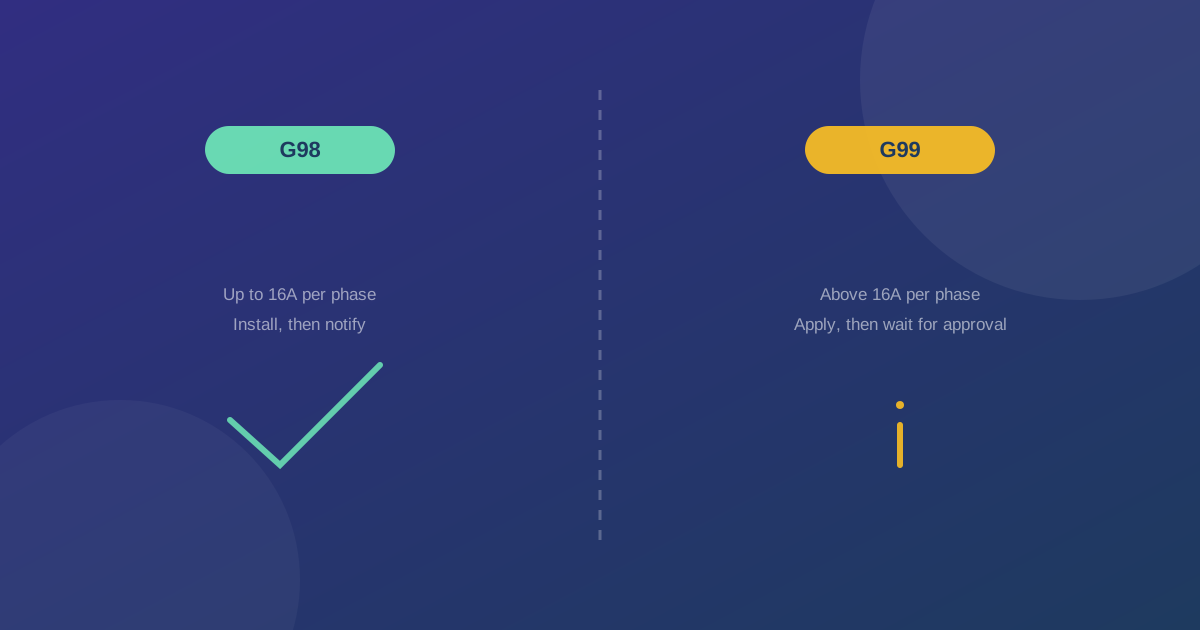
DNO connection paperwork - a G98 notification for systems up to 3.68kW per phase, or a full G99 application for anything larger or where the inverter rating crosses the threshold
Smart Export Guarantee (SEG) registration so the customer gets paid for export
Building control / Part P notification and EPC where applicable
Commissioning certificate and handover pack
At £40 per admin hour, that's £80-£160 of direct labour per install on a job that goes through cleanly. The £350 paperwork line in the table above reflects the average across the slower ones too - the G99 that comes back with questions, the MID record that needs correcting, the SEG registration that gets chased - which is exactly why the tight operations defend it so hard. Multiply by 20 installs a month and you've got thousands of pounds of monthly admin that isn't going to your installers.
The margin leak here isn't the work - it's the double-entry. If your quote lives in one system, your job sheet in another, and your MCS and DNO paperwork in a third, every handover is a re-keying exercise. The installers running clean are the ones where the survey inputs flow straight into the MCS certificate and the DNO application without anyone typing the customer's address three times.
The DNO application is the most underpriced thing on a solar job. Installers cost the panels to the penny and treat the connection process as free. It isn't - and a G99 that comes back with conditions can hold a job for a month.
Jamie Duncan, Head of Customer Operations at Payaca
The most expensive hour in a solar install is the one you didn't plan for. Typical overrun causes:
Roof condition worse than the survey suggested - battens, felt, or tiles needing work before mounting
Scaffolding booked wrong or needed for longer, forcing a second hire
Consumer unit needs upgrading before the inverter can be commissioned
Battery or inverter siting doesn't work as planned - cable runs longer, isolation harder
DNO refuses the requested connection, forcing an export-limiting redesign on the day
Each of these adds half a day to a day of labour and scaffolding, and most of it is unbillable because the quote was fixed. One overrun job per month can wipe out the margin on three clean ones.
The pattern that catches this early is a proper technical survey captured on-site - roof structure, shading, board condition, cable routes - not a desk-based estimate from a satellite image and a couple of photos. The installers holding their margin are the ones whose surveyors confirm what they actually saw, so the install crew arrives to no surprises.
Commissioning is where most installers stop paying attention and margin quietly leaks out. Typical waste:
Engineer finishes the install, leaves, then has to return because the DNO sign-off or a certificate wasn't ready
Handover pack (MCS certificate, electrical certificate, DNO confirmation, warranty, homeowner guide) assembled manually over the following week
SEG registration delayed, so the customer chases the office about export payments
G99 energisation waiting on the DNO while the customer assumes the system is "done"
Every return visit is £200-£400 of labour you can't bill for. Every week of delay on SEG or DNO sign-off is a customer-service cost and a reputational one. And every hour of admin chasing documents is margin out the door.
Installers running tight commissioning workflows use a structured close-out: checklist on site, photos captured on the job, MCS and electrical certificates generated from the same data, and the SEG and DNO paperwork submitted within 48 hours of energisation.
Here's the pattern I see most often. An installer hits 10 installs a month on spreadsheets, WhatsApp, and PDFs. Margin is 20% because the owner is personally closing every quality gap - checking every quote, chasing every DNO application, assembling every handover pack.
They grow to 20 installs a month. The owner can't personally check every job any more. The same processes now produce errors: quotes going out wrong, surveys missing roof detail, DNO applications submitted late, SEG registrations forgotten. Margin drops to 12%.
At 30 installs a month, it gets worse before it gets better. You're now paying for more admin staff, more rework, more return visits, and the operational system hasn't changed. Margin can hit 8%.
The installers who break through this don't hire their way out. They systemise:
Quote templates that pre-configure panels, battery, scaffolding, and SEG logic so any estimator can produce a correct quote in 20 minutes
Survey workflows that force the right inputs - roof, shading, board condition - to be captured on site before a quote can be generated
Integrated MCS and DNO paperwork driven off the survey and quote data, not re-entered
Commissioning checklists that close out the job on site and auto-generate the handover pack
Payment collection triggered by job completion and energisation, not office admin
That's what takes margin from 8% back to 20% at 30 installs a month.
If you're running a solar installation business and can't answer these five questions from this week's data, your margin is leaking somewhere you can't see:
Average quote turnaround - from initial enquiry to quote delivered. Target: under 24 hours.
Quote conversion rate - quotes issued vs jobs won. Target: 25-35%.
Hours of admin per job - measured, not guessed, across MCS, DNO and SEG. Target: under 3 hours.
Return visits per install - if you're going back for commissioning paperwork, a board upgrade, or DNO sign-off, count it. Target: zero.
Time from install complete to DNO sign-off and SEG submitted - cash flow and customer satisfaction depend on this. Target: 48 hours.
Measure these for a month before you make any other operational decision. The answer almost always points to the same two fixes: standardise the quote, integrate the paperwork. Solar margin isn't a panel problem - it's a workflow problem, and the installers holding 20% at scale aren't charging more, they're doing less admin per job, catching roof and board problems earlier in the survey, and closing out energisation cleanly.
See where your margin is going
The five questions above are exactly what we walk through with solar installers in a 20-minute demo - quote turnaround, MCS and DNO admin hours, return visits, time to energisation. Book a walkthrough and we'll map your current numbers against the installers running 20% at 30 installs a month.
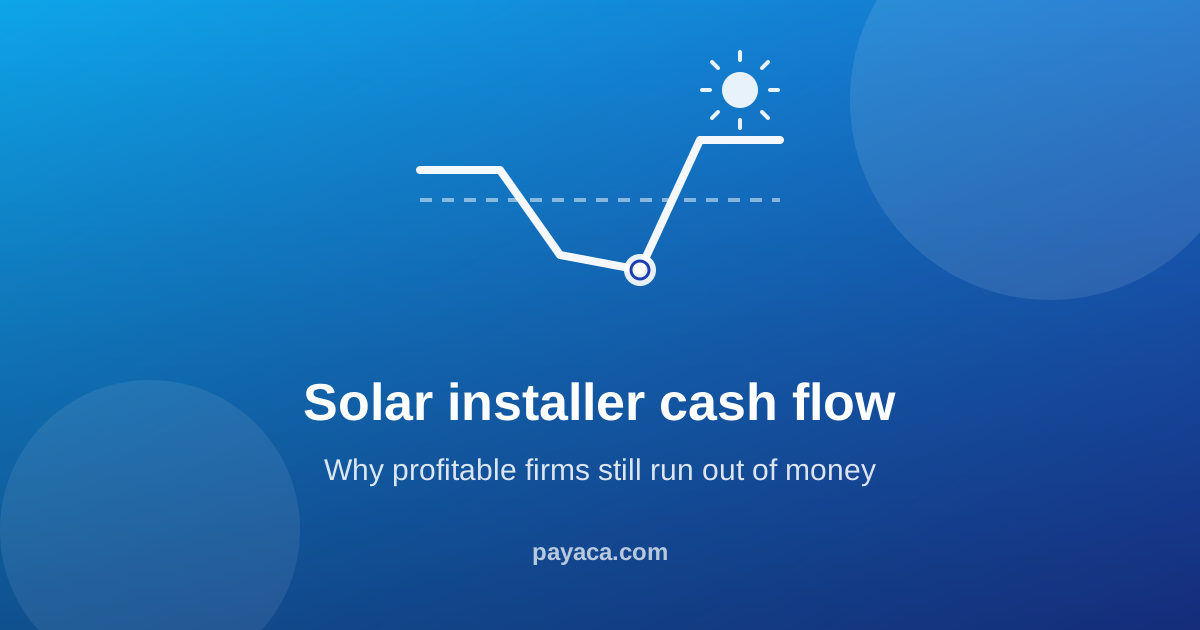
The cash flow maths of a UK solar install business - deposit caps, RECC advance payment rules, supplier terms and the gap between commissioning and final payment. A worked example showing how the same 20% margin job can tie up £4,525 or £250.
G98 and G99 are decided by one number: 16A per phase, measured across everything installed at the property, not per device. The comparison table, the G99 Fast Track route that sits between the two, and the design-capacity rule most guides get wrong.