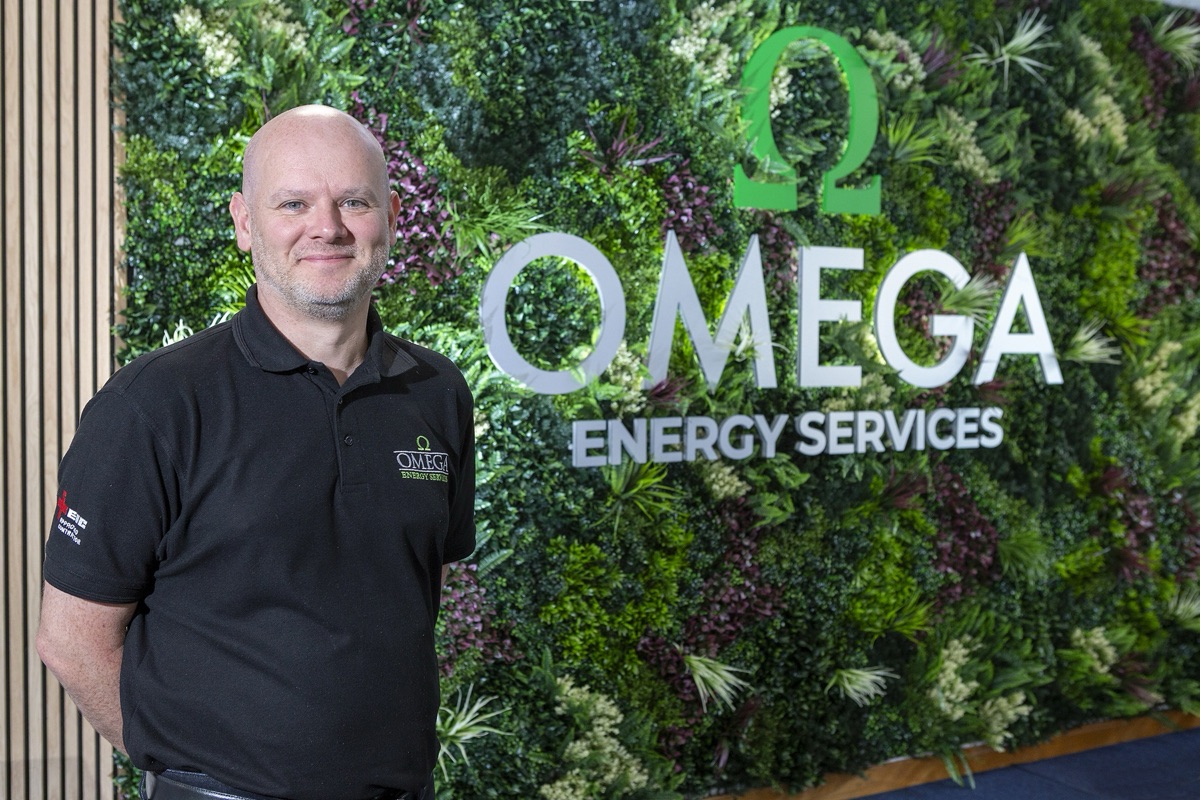
“The general feedback is that we would be lost without it now.”

Stephen Bain
Director, Omega Energy Services
Background
Omega Energy Services was founded in 2007 and is based in Bellshill, North Lanarkshire. It's a PAS 2030 certified retrofit business doing air source heat pumps, solar and insulation, and most of its work comes through Warmer Homes Scotland, where jobs are allocated to approved contractors. Each home can need several measures, and each measure needs a survey, a design, site paperwork and 30 to 40 photos of evidence. The team is an office, a full-time surveyor, their own engineers and some subcontractors, working all over Scotland, including Orkney.
The challenge
Nearly all their work came through Warmer Homes Scotland, the Scottish Government's home energy scheme run by Warmworks, and the Warmworks portal was the only system they had. Surveys were on paper, scaffold requests were handwritten, paperwork was built in Excel and saved as PDFs, and bookings lived in a Google Calendar. Most homes get several measures, so the same details went in again for every design.
Why Payaca
They had never used a CRM. Stephen admits he didn't know what the letters stood for. They wanted to stop typing every job into the Warmworks portal, then the heat pump design tool, then the solar design tool, and to get surveys and site paperwork off paper before volumes went up. They looked at several systems, including building their own. They first found Payaca by asking Google's AI for software that worked with solar and heat pump design, and then kept hearing it recommended by other install businesses and a supplier they trusted. The other systems felt "like a Word document". Payaca felt like "an Apple app". The verdict at the demo was short: "Your CRM is much better, guys."
A portal, a calendar and a lot of paper
The Warmworks portal told them which jobs they'd been allocated, and not much else. They logged in every day to check it, then the real work happened somewhere else: surveys on paper, forms in Excel converted to PDF, scaffold requests written by hand, and installs booked in a shared Google Calendar.
Because most homes get more than one measure, the same customer and property details were typed in again for each design and each set of paperwork. In the scheme's first year volumes were low enough for that to hold together. The plan was to grow, and it wasn't going to hold together at the volumes they were aiming for.
“Everybody's duplicating information numerous times in the process.”
On the first call, describing how a job moved before Payaca
See it on your kind of installs
Book a demoReady before the funding wave
Timing mattered. In August 2025 Warmworks told them to expect a bigger allocation soon: the Scottish Government had signed off a year's budget that had to be spent by the end of March. Installs are due within 28 working days of a job being allocated, so more work meant more surveys, designs and evidence packs, done faster, by the same office.
They wanted the system carrying that load before the jobs arrived, not after. The office was already running in Payaca, and the field team went onto the app the following month, in time for the busiest stretch of the scheme year.
“We expect to be under pressure to deliver quickly, so are keen to get the CRM up and running.”
Stephen Bain, Director, August 2025
Office first, then the field
They signed in May 2025 and set the office up first: eight pipelines, one for each scheme and funder, from the main scheme to island work in Orkney and insulation-only jobs, with dozens of automations moving jobs along and keeping people informed.
The field team came onto the app that September. Compared with their first few months on it, engineers now upload about six times as many photos a month, complete four times as many field tasks and log more than twice the hours against jobs, all on the project they belong to.
It's the engineers doing the work in the app, not the office doing it for them: they complete three in every four field tasks. Customers hear more too, with about ten times as many text updates going out as when the field team started.
Payaca is now how the business runs day to day. Between August and October someone was working in it on every single weekday, 65 out of 65. Every visit, form and photo is time and date stamped on the job, and for scheme work, where evidence gets checked, that record is the point.
“It's just slick. We're in it all day, every day.”
Stephen Bain, Director, November 2026
Paperwork they build themselves
Scheme work comes with a lot of site paperwork, and it keeps changing. Since January the team has built dozens of document templates in Payaca, many of them with Agent Dave, Payaca's built-in AI. Recent ones include a multi-day site sign-in sheet, RAMS, a dynamic risk assessment and a customer disclaimer, each filled from the job.
Seven people at Omega have used Dave to build and change templates, fields and pipeline stages, in hundreds of conversations. Those templates have produced hundreds of documents since February, branded with the Omega logo and ready to send.
“I like that. Having that autonomy to do this.”
Stephen Bain, Director, on building documents with Agent Dave, January 2026
Grid connections from the job
Every heat pump and solar install needs a DNO application. Instead of filling in a separate portal, the team sends G98 and G99 applications from the project and the reply lands back on it. They now send nearly three times as many a month as when they started, with the busiest months this autumn.
It was the first thing that won Stephen over in onboarding. Watching an application fill itself in from the job, he saw what the rest of the system would do.
“I could see the efficiency straight away. It was auto populated.”
Stephen Bain, Director, first onboarding session, May 2025
One of the largest on the scheme
Over the past year Omega Energy Services moved up to become one of the largest install businesses on Warmer Homes Scotland. New jobs in Payaca are up 72%, comparing the first and last three months of the year, while the office team in Payaca grew by only a couple of people. Each office user now handles about 39% more jobs a month. The team in Payaca has grown seven times over since they started, and most of it is in the system every working day.
Stephen reckons the time from a job being allocated to install, against the scheme's 28-day target, has been cut by about half. No job gets lost down a spreadsheet any more, and a bottleneck is easy to spot and deal with. Nine office staff are in Payaca every day, some of them all day, and he puts the time it saves at one to two hours per person a day.
The strongest endorsement came from someone who'd left. When Omega's former contracts manager joined another install business, he got his new company signed up to Payaca straight away. Stephen called it the biggest compliment he could give.
“When I first met you, I didn't know what CRM stood for. And now I'm in it day and night.”
Stephen Bain, Director, November 2026
The results
One of the largest install businesses on Warmer Homes Scotland, with new jobs up 72% in a year and each office user handling about 39% more of them.
Seven times as many people in Payaca as when they started, office and field, and in use every working day.
About six times the engineer photos a month and four times the field tasks, compared with their first months on the app.
Nearly three times the DNO applications a month, sent from the job, and dozens of document templates built in-house, many with Agent Dave.
What they use in Payaca
- Pipeline management
- Mobile app
- Workflow builder
- Grid connections
- Custom forms and documents
- Agent Dave
Looking ahead
Next they're rebuilding their survey forms and moving customer disclaimers onto the field app, so customers sign on site. As Stephen put it: "There's loads of good stuff that we would love to implement and we know Payaca can do it."
Map contains OS data © Crown copyright and database right 2023.